












How to Maximize ROI with Commercial Energy Storage: Savings, Strategies and Payback Period


Is Commercial Energy Storage Worth the Investment?
As electricity prices rise and energy demand continues to grow, more businesses are considering commercial and industrial energy storage systems to manage their electricity costs. However, before making an investment, most decision-makers want answers to two important questions: How much can an energy storage system save, and how long will it take to recover the initial investment?
The financial value of commercial energy storage goes beyond simply storing electricity. By combining peak demand reduction, time-of-use (TOU) strategies, and other energy management applications, businesses can optimize electricity expenses and unlock additional value from their energy resources.
Understanding how these strategies work, along with the factors affecting the payback period, is essential to evaluating whether an energy storage investment makes financial sense.
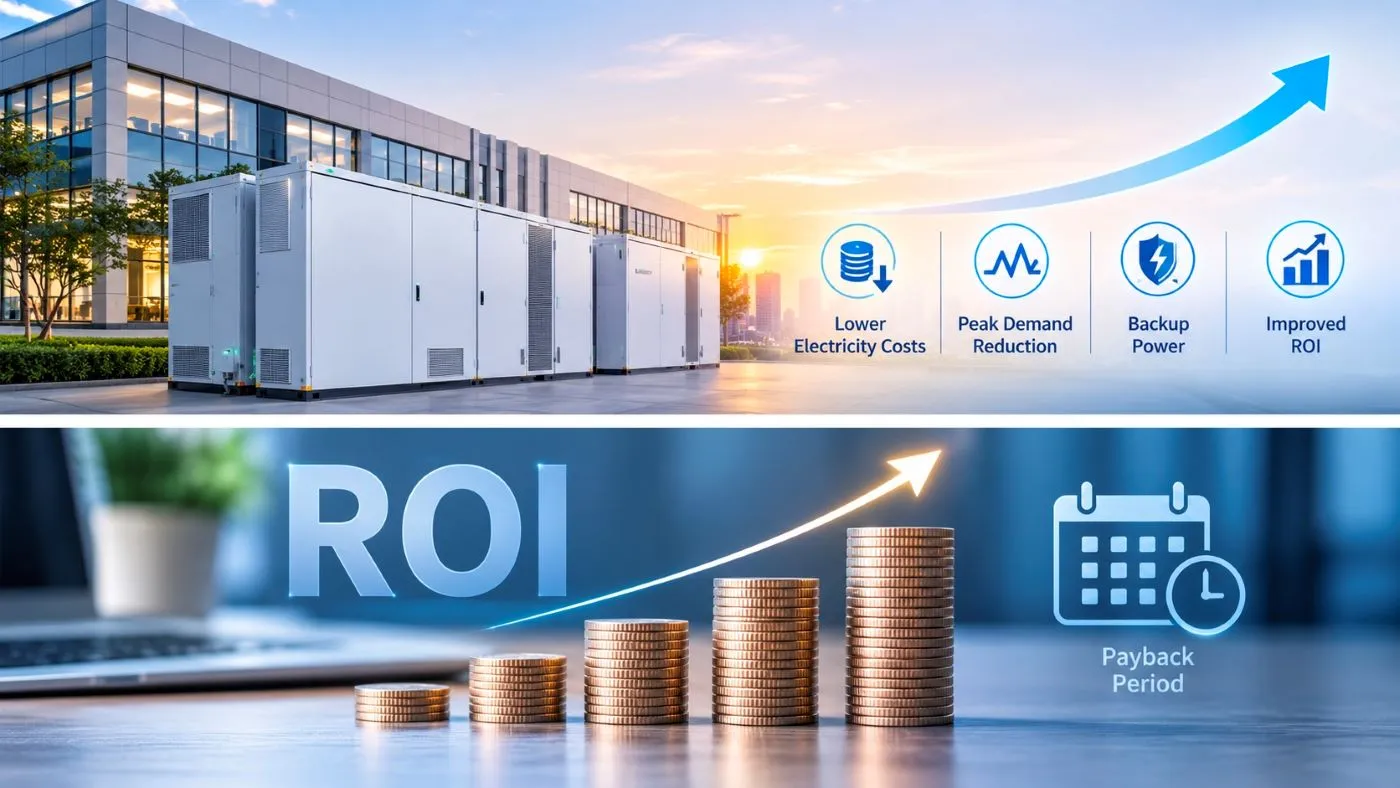
1. How Can Commercial Energy Storage Reduce Electricity Costs?
One of the main advantages of a commercial battery energy storage system is its ability to manage electricity consumption more strategically. Depending on local electricity tariffs and the facility's load profile, several strategies can help reduce operating expenses.
Peak Demand Reduction: Lowering Demand Charges
For many commercial and industrial facilities, electricity bills include demand charges based on the highest level of power demand recorded during a billing period. A short period of high electricity consumption can therefore contribute significantly to the overall electricity bill.
A battery energy storage system can help manage these peaks through peak shaving. When facility electricity demand approaches a certain level, the system discharges stored energy to reduce the amount of power drawn from the grid.
By smoothing peak demand, businesses can lower their maximum demand and potentially reduce related capacity or demand charges. This is particularly valuable for facilities with fluctuating loads, such as manufacturing plants and other energy-intensive operations.
Time-of-Use Strategies: Charging During Off-Peak Hours
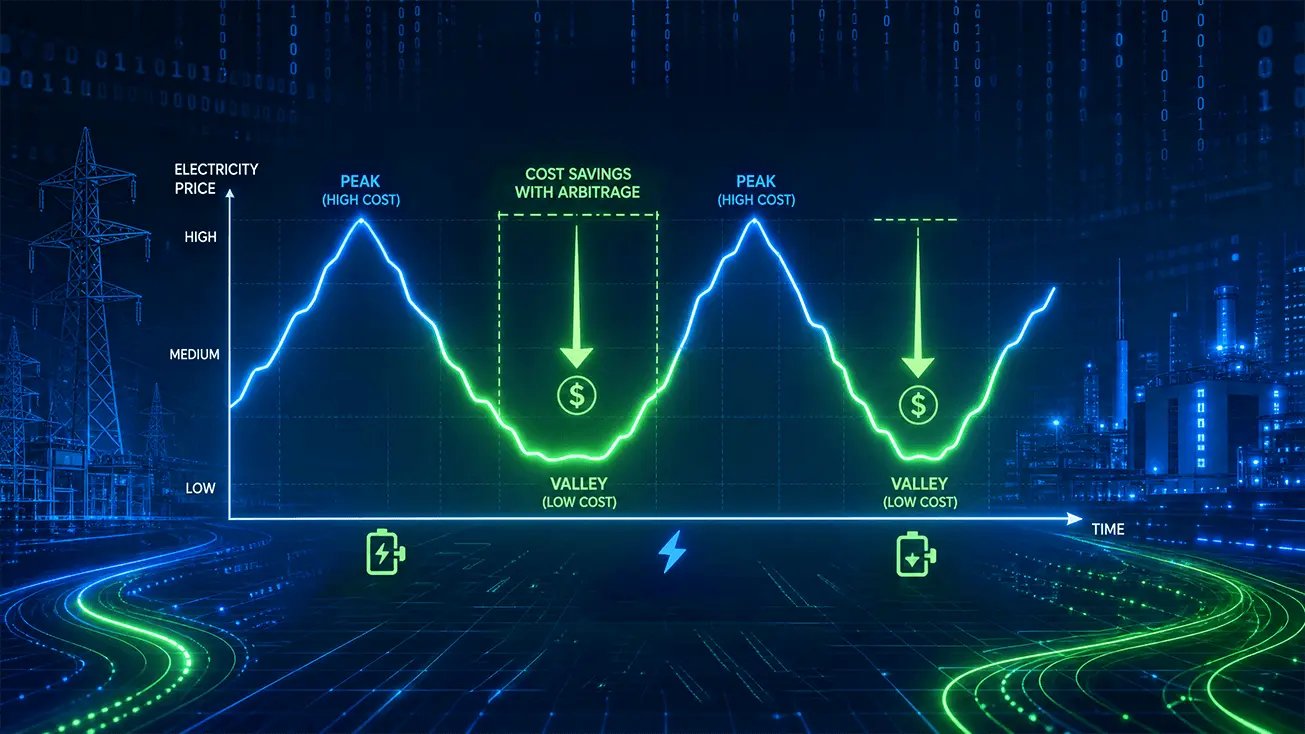
Electricity prices often vary throughout the day. Under time-of-use (TOU) tariffs, electricity is generally less expensive during off-peak periods and more expensive during peak periods.
A battery energy storage system can take advantage of these price differences through a simple charging and discharging strategy:
Off-peak hours: Charge the battery when electricity prices are lower.
Peak hours: Discharge stored energy when electricity prices are higher.
This approach, commonly known as peak-valley arbitrage or electricity price arbitrage, helps businesses reduce their reliance on expensive grid electricity during peak periods.
The potential savings depend largely on the difference between peak and off-peak electricity prices. Regions with larger price differences may offer greater opportunities for energy storage arbitrage.
Combining Multiple Savings Strategies
Peak demand reduction and TOU strategies can also work together. Rather than focusing on only one source of savings, businesses can coordinate battery charging and discharging to manage both peak demand and time-based electricity costs.
The actual benefits depend on the facility's electricity consumption patterns, tariff structure, and energy storage configuration. A strategy that works well for one facility may not deliver the same results for another.
2. How Can Multiple Revenue Streams Improve Energy Storage ROI?
Reducing electricity expenses is an important part of energy storage economics, but it is not the only way to create value. Depending on the project configuration and applicable market programs, a battery energy storage system can support several applications.
Peak Shaving: Reducing Electricity Demand
Peak shaving helps businesses manage their maximum power demand and reduce related electricity charges. By discharging stored energy during periods of high consumption, the system reduces the need to draw electricity from the grid at peak levels.
Demand Response: Unlocking Additional Revenue Opportunities
Demand response programs encourage electricity users to adjust their consumption in response to grid requirements or market signals.
With appropriate energy management and control capabilities, a battery energy storage system can adjust its charging and discharging activities to support demand response requirements. Depending on local market rules and program participation conditions, this may create additional revenue opportunities for businesses.
Emergency Backup Power: Adding Value Beyond Electricity Savings
Power interruptions can lead to production downtime, equipment disruption, and other business losses. An energy storage system can provide backup power during outages, helping keep essential production and office equipment running.
Although backup power does not always generate direct electricity savings, it adds operational value by helping businesses reduce potential losses associated with unexpected outages.
Why Does Value Stacking Matter?
Combining applications such as peak shaving, demand response, and emergency backup power allows businesses to make use of their energy storage assets in different ways.
This approach is often referred to as value stacking. Instead of relying on a single application, businesses can explore multiple sources of economic and operational value, potentially improving the overall return on their investment.
However, not every application can necessarily operate at full capacity simultaneously. The final strategy should account for battery capacity, operating requirements, local electricity market conditions, and backup power priorities.
3. How Long Does It Take for Commercial Energy Storage to Pay for Itself?
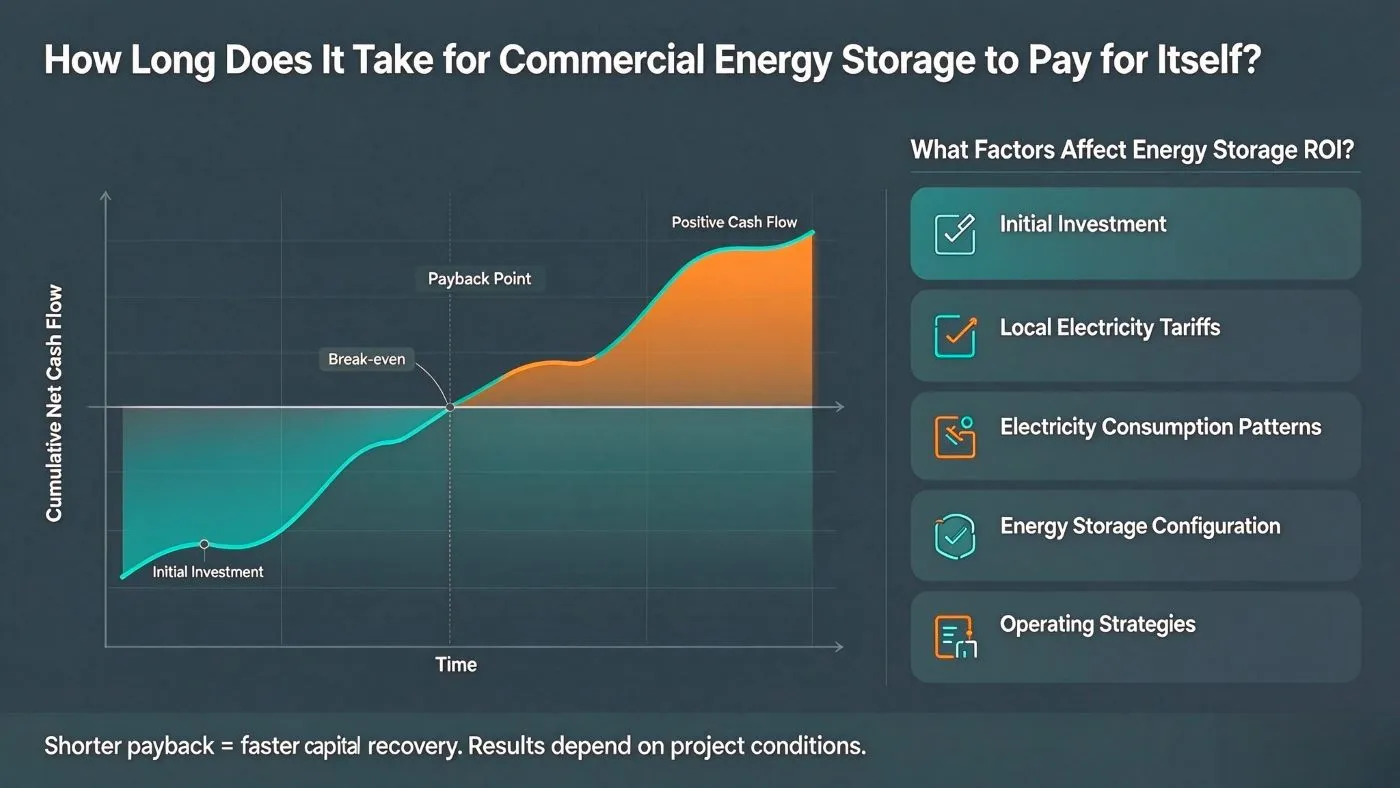
The payback period is one of the most important indicators when evaluating a commercial energy storage investment. It represents the time required for the accumulated financial benefits of a project to recover its initial investment.
To understand this concept, consider how cumulative net cash flow changes over time.
Initial Investment: At the beginning of the project, the initial investment creates a negative cash flow.
Accumulated Savings and Benefits: As the system operates, electricity cost savings and other applicable financial benefits gradually accumulate.
Payback Point: When cumulative net cash flow reaches zero, the project has recovered its initial investment. This is the break-even point and marks the end of the payback period.
Positive Cash Flow: After passing the break-even point, the accumulated net cash flow becomes positive.
The shorter the payback period, the sooner the project recovers its initial investment. However, there is no universal payback period for commercial energy storage projects. Actual results vary according to project conditions.
What Factors Affect Energy Storage ROI?
Several factors influence how quickly an energy storage investment can generate financial returns:
Initial Investment: The total project cost, including the energy storage system and related installation requirements.
Local Electricity Tariffs: Peak and off-peak electricity prices, demand charges, and applicable tariff structures.
Electricity Consumption Patterns: The facility's daily load profile and maximum power demand.
Energy Storage Configuration: Battery capacity, power output, and system design.
Operating Strategies: How effectively the system combines peak shaving, TOU strategies, demand response, and other applicable functions.
Evaluating these factors together provides a more realistic picture of a project's potential financial performance.
4. Why Is Customized Savings Analysis Important?
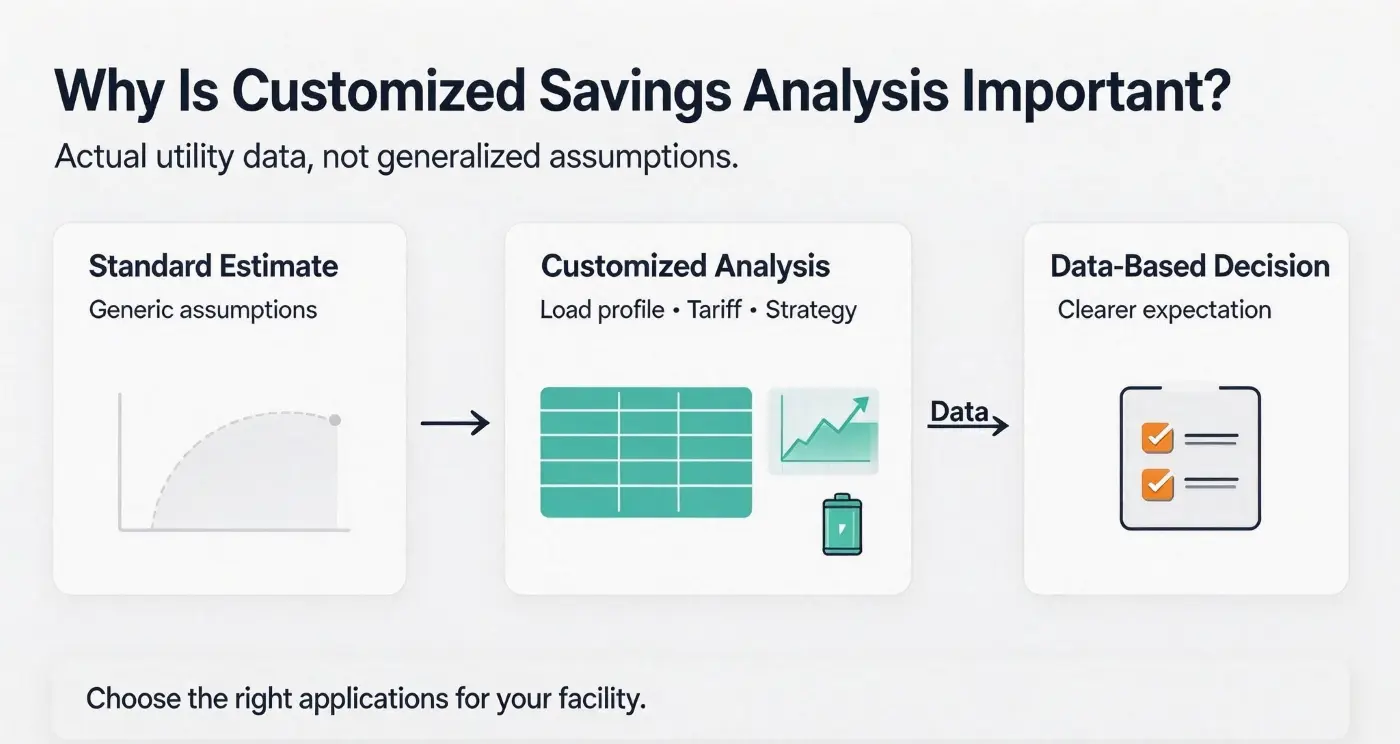
A standard savings estimate cannot accurately represent every commercial or industrial facility. Two businesses may have similar electricity consumption but very different load profiles, operating schedules, and electricity tariffs.
For this reason, energy storage investment decisions should be based on actual utility data rather than generalized assumptions.
From Estimated Savings to Data-Based Analysis
A customized savings analysis can consider:
Historical electricity bills and tariff structures.
Peak demand and daily load profiles.
Peak and off-peak electricity price differences.
Potential applications for energy storage.
Battery system configuration and operating strategies.
By analyzing these factors, businesses can identify suitable energy management strategies and estimate the potential financial benefits under their specific operating conditions.
The analysis can also help determine whether peak shaving, electricity price arbitrage, demand response, or a combination of applications is most suitable for the project.
A data-based approach provides a clearer foundation for investment decisions and helps businesses set more realistic expectations for their energy storage projects.
5. LEOCH Commercial and Industrial Energy Storage Solutions
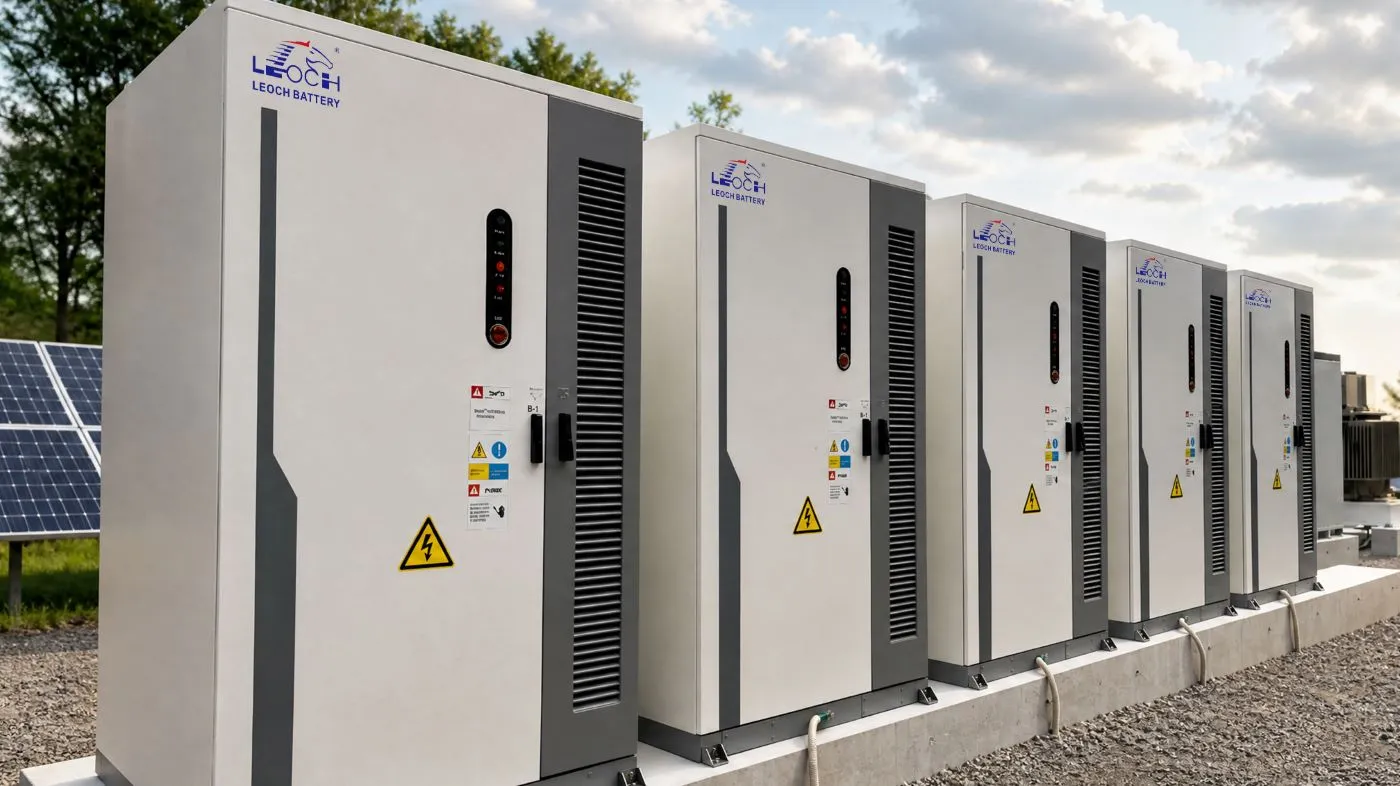
LEOCH provides integrated Commercial and Industrial Energy Storage Solutions featuring standardized, prefabricated cabinet designs. The system integrates battery clusters, PCS converters, BMS, intelligent fire protection, and temperature control modules, with flexible single-unit operation and multi-unit parallel networking to accommodate different facility scales and project requirements.
Supported applications include peak shaving and valley filling, electricity price arbitrage, demand limit control, emergency power backup, power quality optimization, and grid demand response. LEOCH's intelligent Energy Management System (EMS) supports automatic charging and discharging according to electricity tariffs and load profiles, alongside real-time monitoring, remote operation and maintenance, and demand response management.
These capabilities provide businesses with different options for managing electricity consumption and making use of energy storage across commercial and industrial applications.
Explore LEOCH Commercial and Industrial Energy Storage Solutions to learn more.
Conclusion: Make Your Energy Storage Investment Count
Commercial energy storage can create financial value through demand charge reduction, time-of-use strategies, and multiple energy management applications. However, the actual return depends on more than battery capacity or initial system cost.
Understanding local electricity tariffs, analyzing actual consumption data, and selecting suitable operating strategies are all essential to maximizing energy storage ROI.
With a well-planned energy storage solution, businesses can take greater control of their electricity expenses, make better use of energy resources, and build a stronger financial case for long-term investment.






Looking for a Reliable Global Energy Partner?
Connect with our global team to design a custom energy solution for your next project.